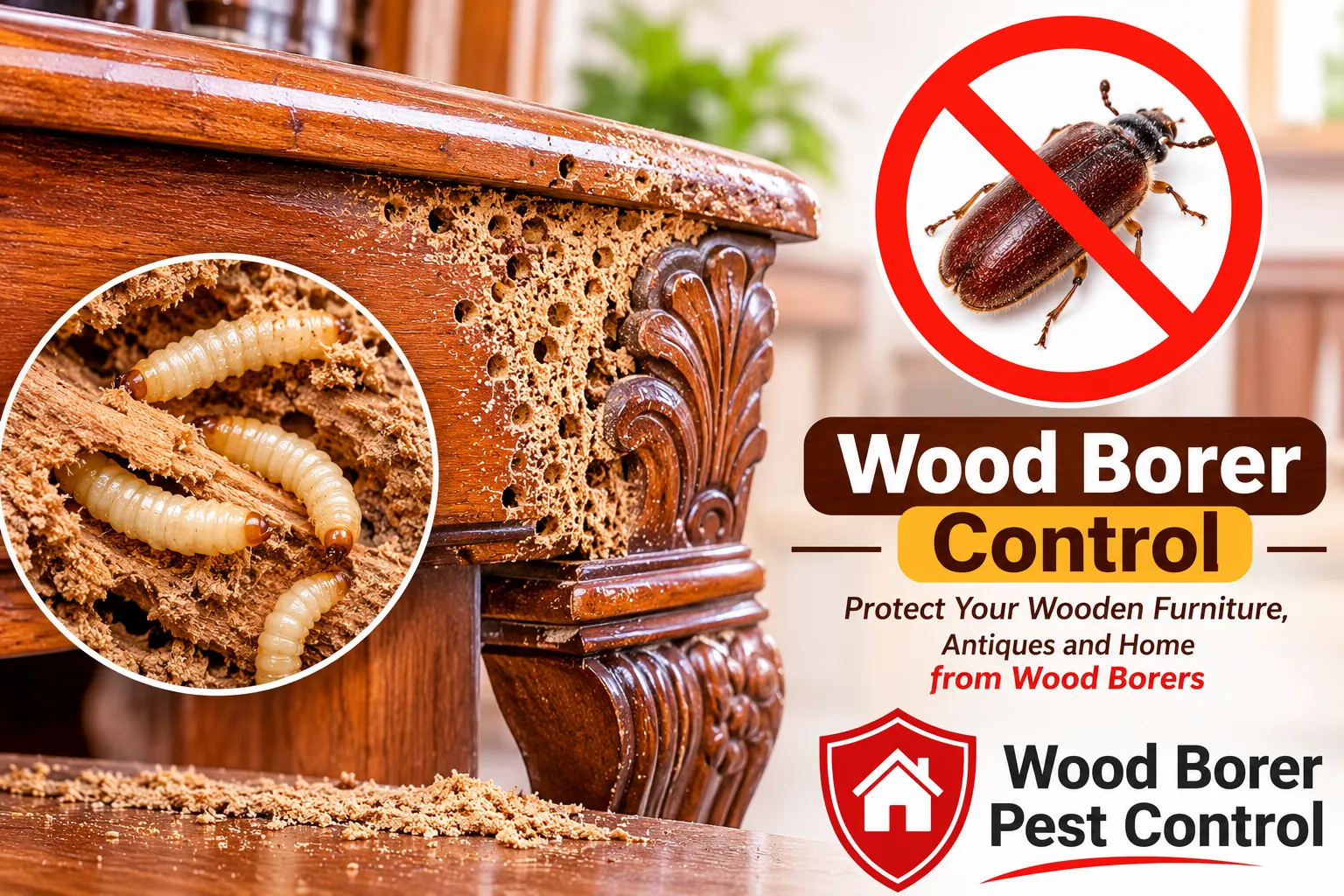
Tiny round holes and a little heap of fine powder under a cupboard are easy to ignore — until a chair leg crumbles or a door frame weakens. Wood borers are beetle larvae that live inside wood for months, and by the time you see holes, the infestation is already active.
This guide explains how to confirm wood borers, what you can check yourself and how professional treatment works.
- Method
- Hole injection + surface treatment
- Treatment time
- 2–4 hours (typical home)
- Need to vacate?
- Not usually; ventilate treated rooms
- Visits
- 1 treatment + inspection
- Best for
- Furniture, doors, frames, antiques, wooden floors
Signs of wood borers to check for
- Small round exit holes (1–3 mm) on furniture, doors or frames
- Fine, flour-like powder (frass) collecting below holes or furniture
- Wood that crumbles easily at the edges or under light pressure
- Fresh holes appearing after the monsoon
- Tiny beetles near windows or lights in warm months
How to check your furniture for wood borers
- Look for round exit holes 1–3 mm wide, especially on unpolished backs and undersides.
- Wipe away old powder and check after a week — fresh powder means active larvae.
- Press gently around holes; soft or crumbling wood shows deeper damage.
- Check nearby pieces too — adult beetles lay eggs on other untreated wood.
- Move affected furniture away from damp walls.
- Don’t polish over holes until the wood has been treated.
What are wood borers and why do they damage furniture?
Wood borers are beetles — such as powder-post beetles and furniture beetles — whose larvae live inside wood for months, eating it and leaving tunnels filled with fine powder. Adult beetles emerge through small round holes, mate, and lay eggs in cracks and pores of untreated wood, so damage spreads from one piece to another.
Mumbai's humidity softens wood and favours borers, especially in plywood, softwood, old teak, cane and antique furniture.
Are wood borers the same as termites?
No. Termites come from the soil, work in colonies, build mud tubes and leave muddy galleries. Wood borers are beetles whose larvae live inside a single piece of wood and leave round exit holes and fine powder, with no mud. The treatment is different, which is why correct identification matters.
How does wood borer treatment work?
- Inspection of all wooden items to find active holes and fresh powder.
- Injection — a registered wood-preservative insecticide is injected into each exit hole so it travels through larval tunnels.
- Surface treatment — all surfaces, especially unpolished and hidden sides, are brushed or sprayed to stop new egg laying.
- Finishing advice — holes can be filled with wax or wood putty and the piece polished once treatment has dried.
Can wood borer damage be repaired?
Light damage is usually cosmetic and can be filled and polished after treatment. Structural pieces with heavy damage — crumbling frames, legs or beams — may need carpentry repair or replacement, which we point out in the inspection report.
What does wood borer treatment cost?
Cost depends on the number and size of wooden items, the extent of infestation and whether doors, frames or flooring are included. We provide a fixed quote after inspecting the affected furniture.
When to get professional treatment
- Fresh powder keeps appearing under furniture or frames.
- Holes are spreading to doors, frames or wooden flooring.
- Antique or expensive furniture is affected.
- You’re unsure whether it’s wood borers or termites.
How professional wood borer treatment works
Inspect
We examine furniture, doors, frames and flooring for active holes and fresh powder.
Inject holes
A registered wood-preservative insecticide is injected into exit holes to reach larvae inside.
Treat surfaces
All surfaces, especially unpolished back and underside panels, are brushed or sprayed.
Dry and ventilate
Treated items are left to dry with the room ventilated.
Re-inspect
We check for fresh powder on follow-up and advise on filling and polishing.
Before and after the treatment
Before the visit
- Empty drawers and cupboards of furniture to be treated.
- Move furniture away from walls so back panels can be reached.
- Mark items where you have seen fresh powder.
- Remove clothes, books and food from treated furniture.
After the treatment
- Keep treated furniture empty and the room ventilated for 24 hours.
- Do not polish or paint until the treatment has dried completely.
- Wipe away old powder and watch for fresh powder in the following weeks.
- Report new holes or powder for re-inspection.
Prevention checklist
- Polish or seal all surfaces of wooden furniture, including the back and underside.
- Keep furniture away from damp walls and control humidity.
- Inspect second-hand and antique furniture before bringing it home.
- Treat new plywood or softwood before installation where possible.
Need professional help?
Fixed written quote
The price is confirmed in writing before work starts — no extra charges added on the day.
Safe-use guidance
You get clear instructions on preparation, re-entry times and aftercare for children and pets.
Homes and businesses
We treat flats, bungalows, housing societies, offices, restaurants, shops and warehouses.
Trained in-house technicians
Our own technicians carry out every visit and follow label directions and safety procedures.
Talk to a technician about wood borer treatment in your home: call or WhatsApp +91-94533 94533, Monday to Saturday, 9 am to 9 pm.
Book inspection