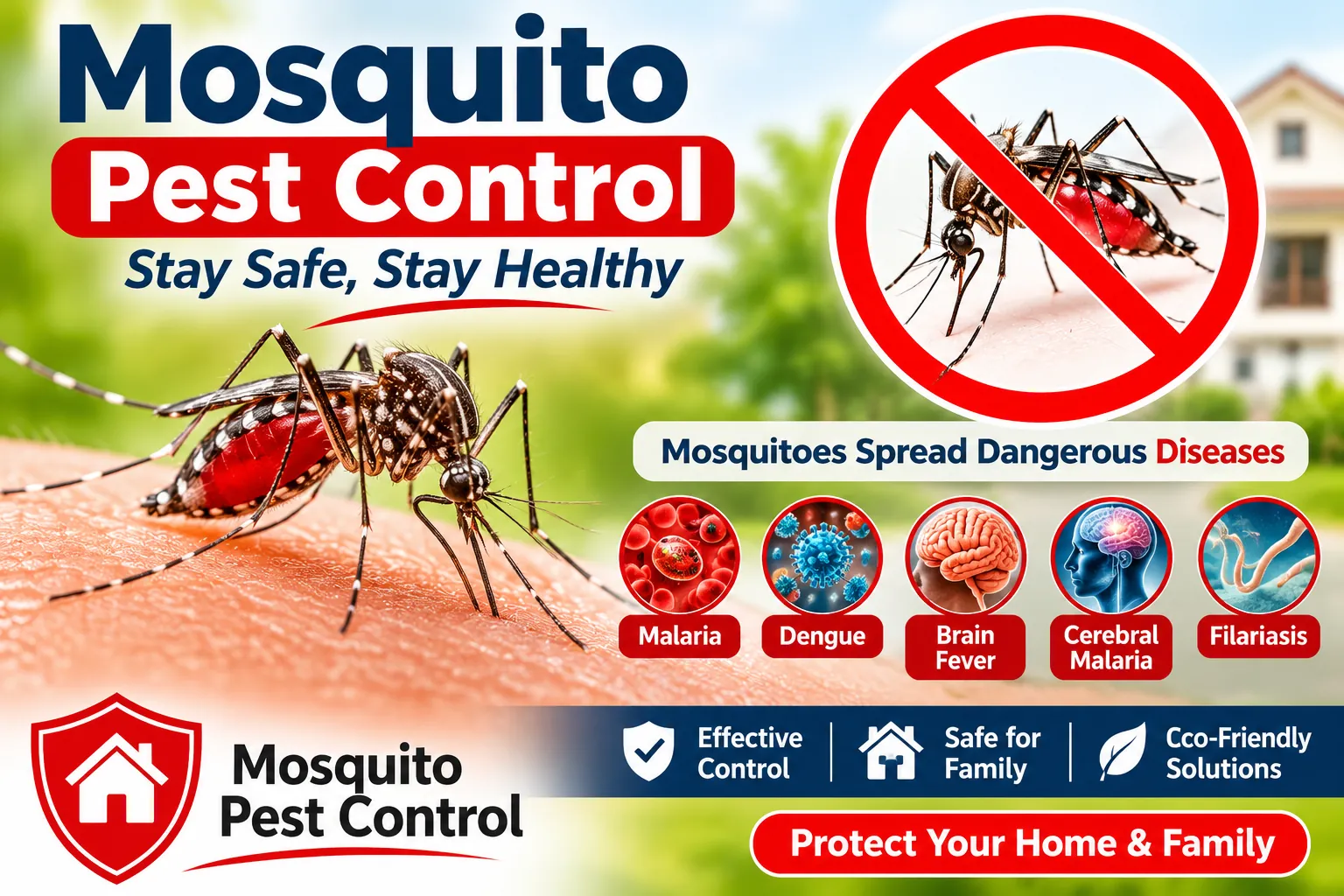
The monsoon brings relief from the heat — and a sharp rise in mosquitoes. Dengue-carrying Aedes mosquitoes breed in clean water in tiny containers, so prevention starts at home and on the terrace.
This checklist covers what families and housing societies can do each week, and when professional mosquito control makes sense.
- Methods
- Larvicide, residual spray, fogging
- Treatment time
- 1–3 hours depending on area
- Re-entry
- After fog settles (about 1 hour)
- Frequency
- Monthly; fortnightly in monsoon
- Best for
- Societies, bungalows, offices, schools, hospitals
Signs of mosquitoes to check for
- Frequent bites at dawn and dusk, or during the day (Aedes mosquitoes)
- Stagnant water in flower pots, coolers, tyres, overhead tanks or terraces
- Larvae ('wrigglers') visible in buckets or water containers
- Mosquitoes resting in dark corners, under furniture and behind curtains
- Dengue or malaria cases reported in your building or neighbourhood
Weekly monsoon checklist
- Empty and scrub flower-pot plates, buckets, coolers and pet bowls once a week.
- Cover overhead and underground tanks and check lids after storms.
- Clear blocked gutters, terrace drains and AC drip trays.
- Dispose of old tyres, coconut shells and containers that collect water.
- Use window mesh and mosquito nets, especially for children and the elderly.
- Ask the society to check construction sites and common areas for stagnant water.
Why is mosquito control important in Mumbai?
Mumbai's monsoon creates thousands of small breeding sites — terrace water, construction sites, flower-pot plates, old tyres and blocked gutters. These support Aedes mosquitoes (dengue, chikungunya) and Anopheles mosquitoes (malaria). Aedes mosquitoes breed in clean water and bite during the day, so they are common inside homes and offices.
How does professional mosquito control work?
Fogging alone gives temporary relief. We combine:
- Source reduction — finding and removing stagnant water during inspection.
- Larvicide — treating water that cannot be removed (drains, sumps, ducts) so larvae cannot develop into adults.
- Indoor residual spray — treating walls and dark resting areas where adult mosquitoes rest.
- Thermal or cold fogging (ULV) — fast knockdown of adult mosquitoes in gardens, compounds, parking and common areas.
Is mosquito fogging safe?
Fogging uses registered insecticides at low doses. To stay safe, close windows during fogging, keep children and pets indoors, cover fish tanks and food, and wait about an hour before using fogged outdoor areas. Our technicians use protective equipment and avoid fogging near open food and water.
Mosquito control for housing societies and campuses
Societies, schools and hospitals benefit most from a monthly schedule, increasing to fortnightly during June–September. We cover compounds, gardens, basements, parking, drains, overhead and underground tank areas and terraces, and share a breeding-site report with the managing committee.
What does mosquito control cost?
Pricing depends on area, number of breeding sites, the methods needed and visit frequency. Societies and commercial campuses usually choose annual contracts. We quote after a site survey.
When to call for professional mosquito control
- There are dengue or malaria cases in the building or neighbourhood.
- Breeding sites are in common areas, drains or sumps you can’t clear.
- Mosquitoes remain a problem despite weekly source reduction.
- You manage a housing society, school, hospital or office campus.
How professional mosquito control works
Survey breeding sites
We inspect terraces, gutters, tanks, pots, drains and construction areas for stagnant water and larvae.
Source reduction
We help remove or empty containers and advise on covering tanks and fixing blocked drains.
Larvicide
Water that cannot be removed is treated so larvae cannot develop.
Residual spray and fogging
Resting areas are sprayed and outdoor areas fogged to knock down adult mosquitoes.
Repeat
Monthly visits — fortnightly in monsoon — keep populations low.
Before and after the treatment
Before the visit
- Close windows and doors before outdoor fogging.
- Cover food, utensils, fish tanks and bird cages.
- Keep children and pets indoors during and for about an hour after fogging.
- Empty water from coolers, pots and buckets before the visit.
After the treatment
- Ventilate rooms after indoor residual spraying before re-entering.
- Do not wash sprayed walls for at least two weeks.
- Change water in flower vases and pet bowls every two days.
- Report new stagnant-water sites in your building to the society.
Prevention checklist
- Empty and scrub water containers once a week — eggs stick to the sides.
- Cover overhead tanks and keep gutters and drains clear.
- Use window mesh and mosquito nets, especially in monsoon.
- Check terraces, balconies and AC drip trays after rain.
Need professional help?
Safe-use guidance
You get clear instructions on preparation, re-entry times and aftercare for children and pets.
Free inspection first
We find the cause before quoting, so you only pay for treatment you actually need.
Homes and businesses
We treat flats, bungalows, housing societies, offices, restaurants, shops and warehouses.
Written warranty
Your service period is written on the report, with free re-treatment if activity returns within it.
Book your free inspection for mosquito control in your home today. We’ll inspect, explain and quote in writing before starting any work.
Book inspection