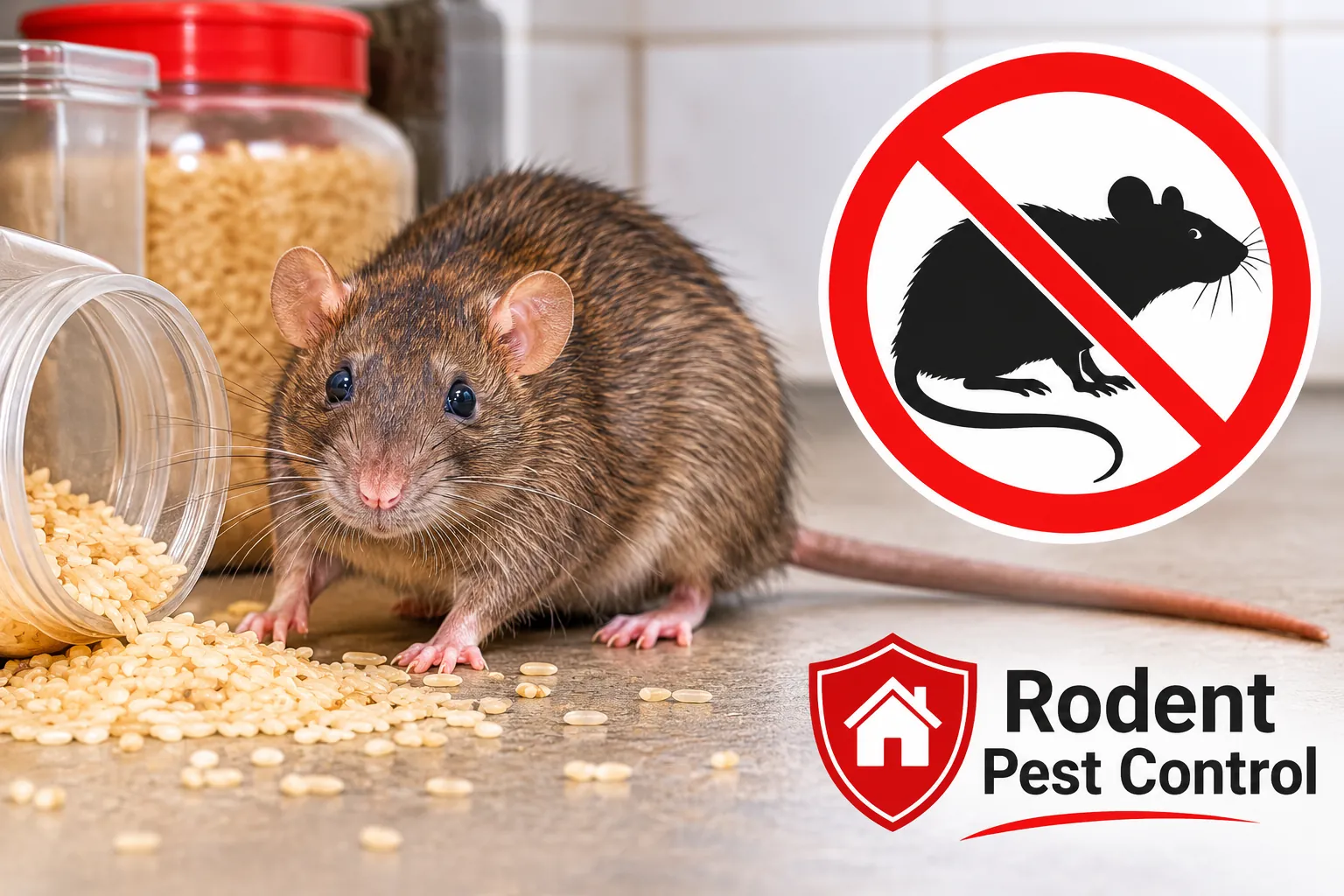
Rats and mice don’t just damage food and wires — they can spread disease, and their numbers grow quickly. The secret to lasting control is combining population reduction with proofing so new rodents can’t get in.
This guide covers identification, safe DIY steps and the signs that it’s time for a professional programme.
- Methods
- Bait stations, traps, proofing
- Visits
- Initial + 2–3 follow-ups
- Need to vacate?
- No
- Results
- Activity drops over 2–4 weeks
- Best for
- Homes, societies, shops, restaurants, warehouses
Signs of rats and mice to check for
- Droppings near food, along walls, in cupboards or false ceilings
- Gnawed wires, pipes, food packets, doors or furniture edges
- Scratching or running sounds in ceilings and walls at night
- Grease marks along walls and holes near drains or gutters
- Shredded paper, cloth or plastic used as nesting material
Rodent control steps for homes
- Identify the rodent: droppings size and gnaw marks tell rats from mice.
- Find runways and entry points along walls, drains, pipes and lofts.
- Store food and grain in hard, sealed containers; clear garbage nightly.
- Use snap traps along walls with the trigger facing the wall.
- Seal gaps larger than a pencil with wire mesh and sealant.
- Avoid loose poison and glue boards around children and pets.
Why is rat control urgent in Mumbai?
Rats and mice contaminate food and surfaces with urine and droppings, damage electrical wiring (a fire risk), and are linked to diseases such as leptospirosis, which rises in Mumbai during the monsoon. Rodents breed quickly, so a few sightings can become a large population within weeks.
How does professional rodent control work?
We follow an integrated approach rather than just leaving poison:
- Inspection to find nests, runways, food sources and entry points.
- Tamper-resistant bait stations — lockable boxes that hold registered rodenticide out of reach of children, pets and non-target animals.
- Mechanical traps for indoor areas and food zones where baiting is not appropriate.
- Proofing — sealing gaps around pipes, drains and doors with wire mesh, door sweeps and sealant so rodents cannot return.
- Monitoring on follow-up visits to remove carcasses, refill stations and track activity.
Is rat poison safe to use in a home?
Loose rat poison is risky around children and pets and can cause rodents to die inside walls, producing odour. That is why we only place rodenticide inside locked bait stations, use traps indoors where appropriate, and focus on proofing. We do not recommend glue boards because they are inhumane.
Rodent control for warehouses, restaurants and societies
Commercial sites need a perimeter of numbered bait stations, internal traps, a site map and service logs — the format most food-safety and warehouse audits expect. For housing societies we cover compound walls, garbage areas, basements, parking and drains, which is where most building infestations start.
What does rodent control cost in Mumbai?
Cost depends on property size, rodent species and activity level, the number of bait stations and traps needed, proofing work, and visit frequency. We provide a fixed written quote after inspection.
When to call a professional
- You hear rodents in ceilings or walls at night.
- Wires, pipes or doors are being gnawed.
- It’s a restaurant, shop, warehouse or housing society.
- Activity continues after two to three weeks of trapping.
How professional rat & rodent control works
Inspect
We trace droppings, gnaw marks and runways to find nests, food sources and entry points.
Place stations and traps
Tamper-resistant bait stations go along walls and the perimeter; traps are used in sensitive indoor areas.
Proof entry points
We recommend or install mesh, door sweeps and sealant to close gaps around pipes, drains and doors.
Monitor
Follow-up visits remove carcasses, refill stations and record activity until it stops.
Maintain
For commercial sites, a monthly plan keeps a permanent monitoring perimeter in place.
Before and after the treatment
Before the visit
- Store food and grains in hard, sealed containers.
- Clear clutter from lofts, storerooms and areas under kitchen platforms.
- Note where you have heard or seen rodents to guide placement.
- Keep pets indoors or away from areas where stations will be placed outdoors.
After the treatment
- Do not move or open bait stations and traps.
- Report any bad odour so we can locate and remove carcasses.
- Keep garbage covered and remove food scraps every night.
- Complete proofing work recommended in the report to prevent re-entry.
Prevention checklist
- Seal gaps larger than a pencil around pipes, cables and drains.
- Fit mesh on drain outlets, ventilation openings and AC duct holes.
- Keep garbage in closed bins and clear it daily.
- Trim tree branches and creepers touching the building.
Need professional help?
Homes and businesses
We treat flats, bungalows, housing societies, offices, restaurants, shops and warehouses.
Low-odour methods indoors
Gel baits, bait stations and targeted crack-and-crevice treatment keep odour and exposure low.
Fixed written quote
The price is confirmed in writing before work starts — no extra charges added on the day.
Safe-use guidance
You get clear instructions on preparation, re-entry times and aftercare for children and pets.
Don’t wait for rats and mice in your home to spread to the rest of the building. A free inspection is the quickest way to know exactly what you’re dealing with.
Book inspection