What are the signs of bed bugs in your home?
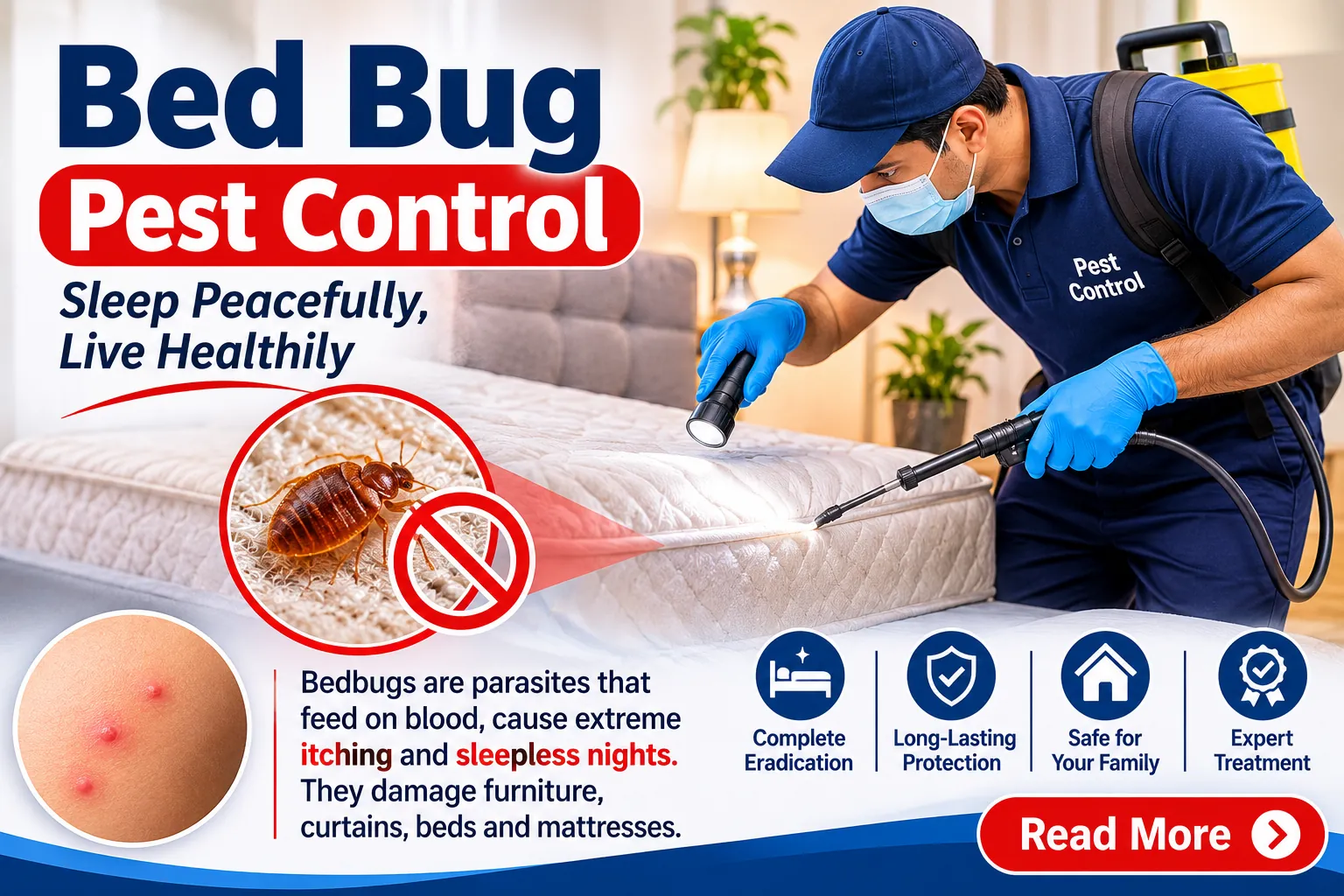
- Itchy red bites in a line or cluster on arms, neck and legs after sleeping
- Small rust-coloured or dark spots on bed sheets and mattress seams
- Live flat, brown bugs or pale nymphs in mattress seams, bed joints and sofa folds
- Tiny white eggs and shed skins in cracks of the bed frame and headboard
- A sweet, musty smell in heavily infested rooms
Why are bed bugs so hard to get rid of?
Bed bugs hide in seams, joints and cracks only millimetres wide, can survive for months without feeding, and their eggs are protected from most sprays. That is why a single spray — or a home remedy — usually reduces bugs for a few days before they return.
In Mumbai, bed bugs commonly arrive through luggage after travel, second-hand furniture, PG and hostel stays, and shared walls in apartment buildings.
How does our 2-visit bed bug treatment work?
Visit 1 treats mattresses, bed frames, headboards, sofas, curtain folds, cupboards, switchboards and wall cracks with a registered residual insecticide, focusing on seams and joints where bugs hide.
Visit 2, about 10–15 days later, is timed to catch nymphs that have hatched from eggs since the first visit, before they mature and lay new eggs. Skipping the second visit is the most common reason bed bugs come back.
Should I throw away my mattress if it has bed bugs?
Usually no. Most mattresses can be treated successfully. Throwing an infested mattress out without treating the room often spreads bugs to other rooms or flats, and the new mattress gets re-infested from the bed frame and furniture.
After treatment, a zippered bed-bug-proof mattress encasement helps trap any remaining bugs and makes future inspection easy.
Bed bug treatment for hostels, PGs and hotels
Shared accommodation needs room-by-room inspection, treatment of adjoining rooms, and a schedule that fits occupancy. We provide discreet service, after-hours visits and treatment records for hotels, hostels and PG operators.
What does bed bug treatment cost in Mumbai?
Pricing depends on the number of rooms and beds, sofas and furniture to be treated, and infestation level. Both visits are included in the quoted price. We confirm the fixed price after inspection.
How is bed bugs control done? Our step-by-step process
Inspect
We check mattress seams, bed joints, sofas, curtains, switchboards and cracks to find infested areas and estimate severity.
Prepare the room
You wash bedding and clothes in hot water, de-clutter, and stand mattresses on edge as per our checklist.
First treatment
Seams, joints, cracks and furniture are treated with a registered residual insecticide.
Second treatment
10–15 days later we re-treat to kill nymphs that hatched from eggs after the first visit.
Review
We check for activity and advise on encasements and prevention while travelling.
How to prepare, and what to do after treatment
Before the visit
- Wash bed sheets, pillow covers, curtains and clothes from infested rooms in hot water and dry them in the sun or on high heat.
- Remove clutter from under beds and around sofas; pack clean clothes in sealed bags.
- Strip the bed and stand the mattress on its side so all seams can be treated.
- Do not move furniture or mattresses to another room — this spreads bed bugs.
After the treatment
- Stay out of treated rooms for 3–4 hours and ventilate well before using them.
- Do not wash mattresses, bed frames or sofas for at least a week after treatment.
- Expect occasional bites for a few days as hatching nymphs contact the treatment.
- Keep the second-visit appointment — it is essential for complete control.
How to prevent bed bugs from coming back
- Inspect hotel beds and keep luggage on a rack, not on the bed or floor, when travelling.
- Unpack and wash travel clothes immediately after returning home.
- Check second-hand beds, sofas and mattresses carefully before bringing them in.
- Use bed-bug-proof encasements on mattresses and pillows.