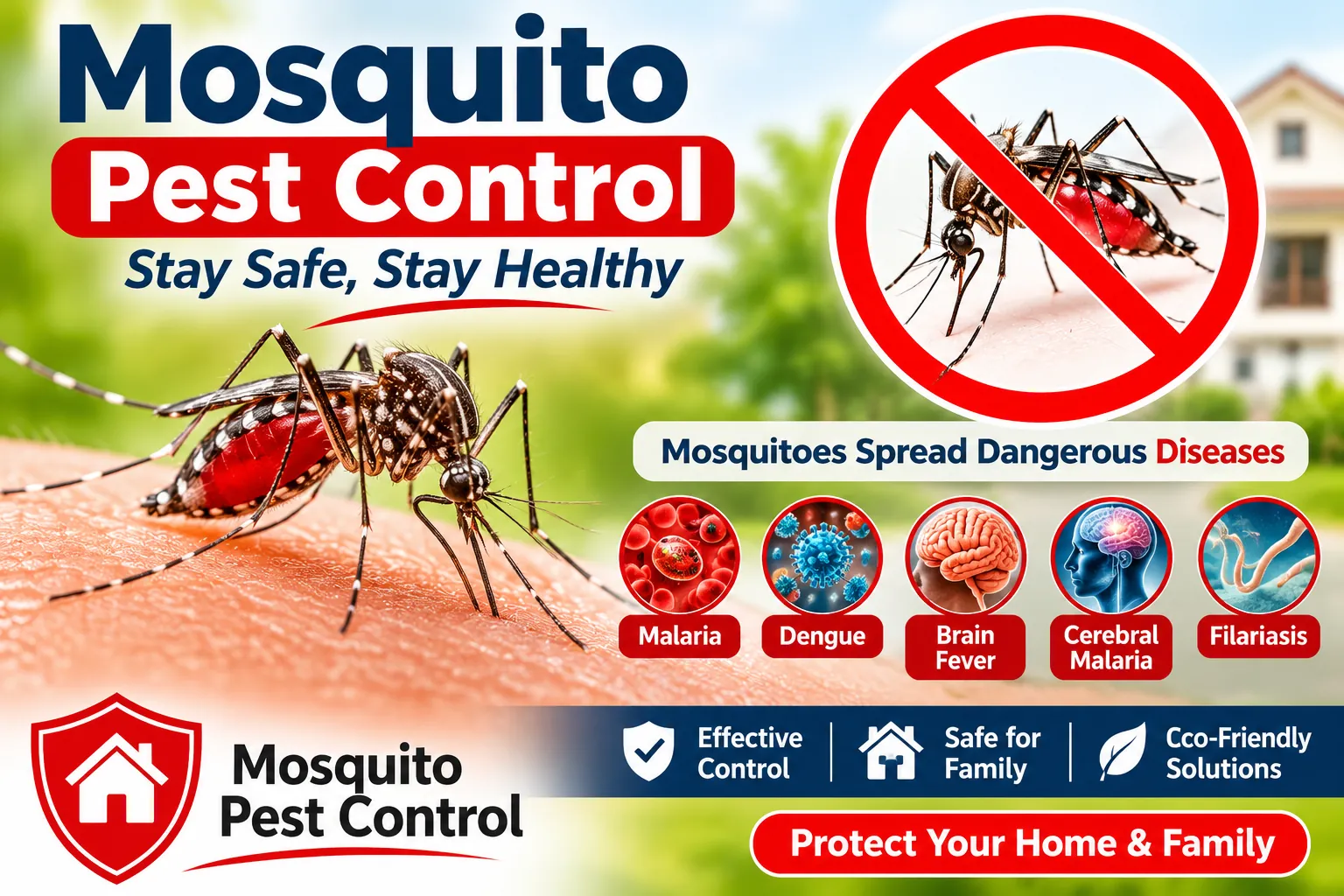
Residents and businesses in Ghatkopar call us when mosquitoes start showing up in kitchens, storerooms, bedrooms or common areas. Here is how our mosquito control works and what you can expect from the visit.
There are no surprise charges on the day: the price is confirmed in writing after inspection, based on the size of your property and the level of activity.
- Methods
- Larvicide, residual spray, fogging
- Treatment time
- 1–3 hours depending on area
- Re-entry
- After fog settles (about 1 hour)
- Frequency
- Monthly; fortnightly in monsoon
- Best for
- Societies, bungalows, offices, schools, hospitals
Eastern Suburbs
Pest problems in Ghatkopar
Homes and businesses in Ghatkopar face the same humid conditions as the rest of the region, with shared drains and nearby shops keeping pests active all year.
Between the Central and Harbour railway lines, the eastern suburbs mix older industrial land, newly built towers and established colonies, with lakes, hills and the Thane creek close by. Dense station markets in Kurla and Ghatkopar keep cockroach activity high in surrounding buildings. Industrial estates and godowns support rodent populations that move into nearby residential areas.
Alongside mosquito control, households and businesses in Ghatkopar also book cockroach control, commercial pest control, dog tick control and fly control with us — see the links further down this page.
How to tell if you have mosquitoes
- Frequent bites at dawn and dusk, or during the day (Aedes mosquitoes)
- Mosquitoes resting in dark corners, under furniture and behind curtains
- Larvae ('wrigglers') visible in buckets or water containers
- Stagnant water in flower pots, coolers, tyres, overhead tanks or terraces
- Dengue or malaria cases reported in your building or neighbourhood
How does professional mosquito control work?
Fogging alone gives temporary relief. We combine:
- Source reduction — finding and removing stagnant water during inspection.
- Larvicide — treating water that cannot be removed (drains, sumps, ducts) so larvae cannot develop into adults.
- Indoor residual spray — treating walls and dark resting areas where adult mosquitoes rest.
- Thermal or cold fogging (ULV) — fast knockdown of adult mosquitoes in gardens, compounds, parking and common areas.
Mosquito control for housing societies and campuses
Societies, schools and hospitals benefit most from a monthly schedule, increasing to fortnightly during June–September. We cover compounds, gardens, basements, parking, drains, overhead and underground tank areas and terraces, and share a breeding-site report with the managing committee.
What does mosquito control cost?
Pricing depends on area, number of breeding sites, the methods needed and visit frequency. Societies and commercial campuses usually choose annual contracts. We quote after a site survey.
Our mosquito control process, step by step
Survey breeding sites
We inspect terraces, gutters, tanks, pots, drains and construction areas for stagnant water and larvae. For Ghatkopar, the technician look at balconies, lofts and storage areas that are often missed.
Source reduction
We help remove or empty containers and advise on covering tanks and fixing blocked drains.
Larvicide
Water that cannot be removed is treated so larvae cannot develop.
Residual spray and fogging
Resting areas are sprayed and outdoor areas fogged to knock down adult mosquitoes.
Repeat
Monthly visits — fortnightly in monsoon — keep populations low.
Before and after the treatment
Before the visit
- Keep children and pets indoors during and for about an hour after fogging.
- Empty water from coolers, pots and buckets before the visit.
- Close windows and doors before outdoor fogging.
After the treatment
- Report new stagnant-water sites in your building to the society.
- Do not wash sprayed walls for at least two weeks.
- Change water in flower vases and pet bowls every two days.
Keeping mosquitoes away after treatment
- Empty and scrub water containers once a week — eggs stick to the sides.
- Use window mesh and mosquito nets, especially in monsoon.
- Cover overhead tanks and keep gutters and drains clear.
What you can expect in Ghatkopar
Written warranty
Your service period is written on the report, with free re-treatment if activity returns within it.
Trained in-house technicians
Our own technicians carry out every visit and follow label directions and safety procedures.
Documented service
Every visit is recorded in a service report — useful for societies and audit-ready for businesses.
Low-odour methods indoors
Gel baits, bait stations and targeted crack-and-crevice treatment keep odour and exposure low.
How much does mosquito control cost in Ghatkopar?
Pricing for mosquito control in Ghatkopar is based on carpet area, the number of rooms or zones treated, the infestation level and the plan you choose. You’ll know the exact amount before any work starts.
Don’t wait for mosquitoes in Ghatkopar to spread to the rest of the building. A free inspection is the quickest way to know exactly what you’re dealing with.
Book inspection