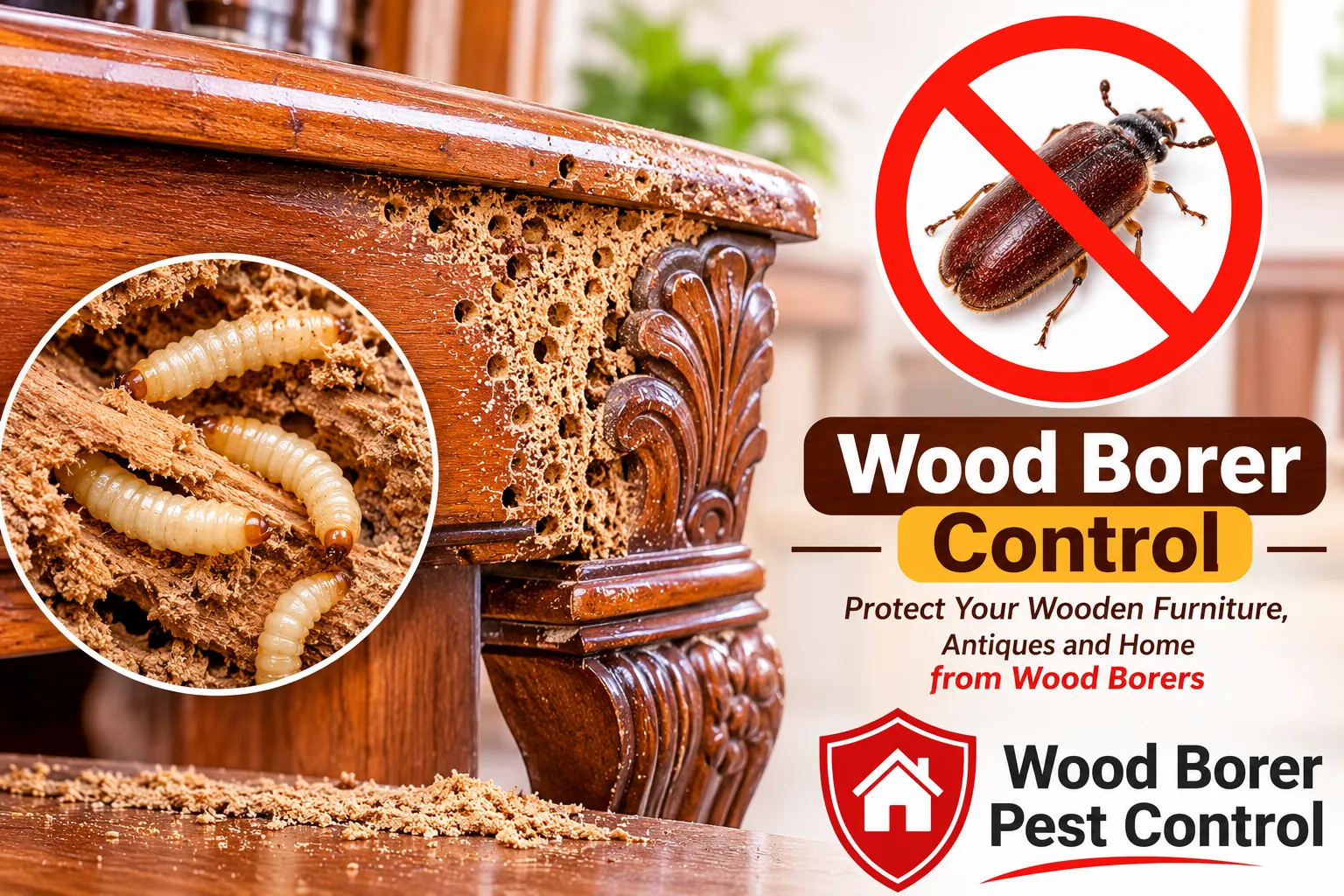
Residents and businesses in Dockyard Road call us when wood borers start showing up in kitchens, storerooms, bedrooms or common areas. Here is how our wood borer treatment works and what you can expect from the visit.
We use odourless gel and bait methods indoors wherever they work, and keep sprays limited to cracks, drains and outer areas, so most families can stay at home during treatment.
- Method
- Hole injection + surface treatment
- Treatment time
- 2–4 hours (typical home)
- Need to vacate?
- Not usually; ventilate treated rooms
- Visits
- 1 treatment + inspection
- Best for
- Furniture, doors, frames, antiques, wooden floors
South Mumbai
About pest control in Dockyard Road
Along Dockyard Road, shops, restaurants and residential buildings share the same drains and service lanes, so pest activity in one building quickly spreads to the next.
Between the sea-facing apartments, markets and office districts of South Mumbai, salty humid air and ageing plumbing create damp corners that cockroaches, termites and rodents favour. Shared light-wells and drain stacks in older buildings let cockroaches travel between flats, so treating drains matters. Old wooden staircases, doors and lofts make termite and wood borer checks especially important here.
Alongside wood borer treatment, households and businesses in Dockyard Road also book cockroach control, commercial pest control, mosquito control and pest control with us — see the links further down this page.
Early warning signs to look for in Dockyard Road
- Wood that crumbles easily at the edges or under light pressure
- Fine, flour-like powder (frass) collecting below holes or furniture
- Tiny beetles near windows or lights in warm months
- Small round exit holes (1–3 mm) on furniture, doors or frames
- Fresh holes appearing after the monsoon
Are wood borers the same as termites?
No. Termites come from the soil, work in colonies, build mud tubes and leave muddy galleries. Wood borers are beetles whose larvae live inside a single piece of wood and leave round exit holes and fine powder, with no mud. The treatment is different, which is why correct identification matters.
How does wood borer treatment work?
- Inspection of all wooden items to find active holes and fresh powder.
- Injection — a registered wood-preservative insecticide is injected into each exit hole so it travels through larval tunnels.
- Surface treatment — all surfaces, especially unpolished and hidden sides, are brushed or sprayed to stop new egg laying.
- Finishing advice — holes can be filled with wax or wood putty and the piece polished once treatment has dried.
Can wood borer damage be repaired?
Light damage is usually cosmetic and can be filled and polished after treatment. Structural pieces with heavy damage — crumbling frames, legs or beams — may need carpentry repair or replacement, which we point out in the inspection report.
Our wood borer treatment process, step by step
Inspect
We examine furniture, doors, frames and flooring for active holes and fresh powder. For Dockyard Road, the technician also check shared drains, ducts and the building’s common areas where relevant.
Inject holes
A registered wood-preservative insecticide is injected into exit holes to reach larvae inside.
Treat surfaces
All surfaces, especially unpolished back and underside panels, are brushed or sprayed.
Dry and ventilate
Treated items are left to dry with the room ventilated.
Re-inspect
We check for fresh powder on follow-up and advise on filling and polishing.
Before and after the treatment
Before the visit
- Move furniture away from walls so back panels can be reached.
- Mark items where you have seen fresh powder.
- Remove clothes, books and food from treated furniture.
After the treatment
- Do not polish or paint until the treatment has dried completely.
- Keep treated furniture empty and the room ventilated for 24 hours.
- Wipe away old powder and watch for fresh powder in the following weeks.
Keeping wood borers away after treatment
- Inspect second-hand and antique furniture before bringing it home.
- Polish or seal all surfaces of wooden furniture, including the back and underside.
- Treat new plywood or softwood before installation where possible.
What you can expect in Dockyard Road
Homes and businesses
We treat flats, bungalows, housing societies, offices, restaurants, shops and warehouses.
Written warranty
Your service period is written on the report, with free re-treatment if activity returns within it.
Low-odour methods indoors
Gel baits, bait stations and targeted crack-and-crevice treatment keep odour and exposure low.
Trained in-house technicians
Our own technicians carry out every visit and follow label directions and safety procedures.
How much does wood borer treatment cost in Dockyard Road?
The cost of wood borer treatment in Dockyard Road depends on the size of the property, how widespread the activity is and whether you choose a one-time visit or an annual plan. We confirm a fixed price in writing after a free inspection.
Don’t wait for wood borers in Dockyard Road to spread to the rest of the building. A free inspection is the quickest way to know exactly what you’re dealing with.
Book inspection