Skip to content

Western Suburbs

Termite Control in Malad

Termite Control in Malad usually takes 4–6 hours (typical 2 BHK). Need to vacate? Not usually; avoid treated rooms for a few hours. Anti-termite treatment in Malad is usually done by the drill-fill-seal method: small holes are drilled along the wall-floor junction, a registered termiticide is injected to create a chemical barrier, and the holes are sealed. Infested wood is treated separately.

5.0/5from 8 reviews
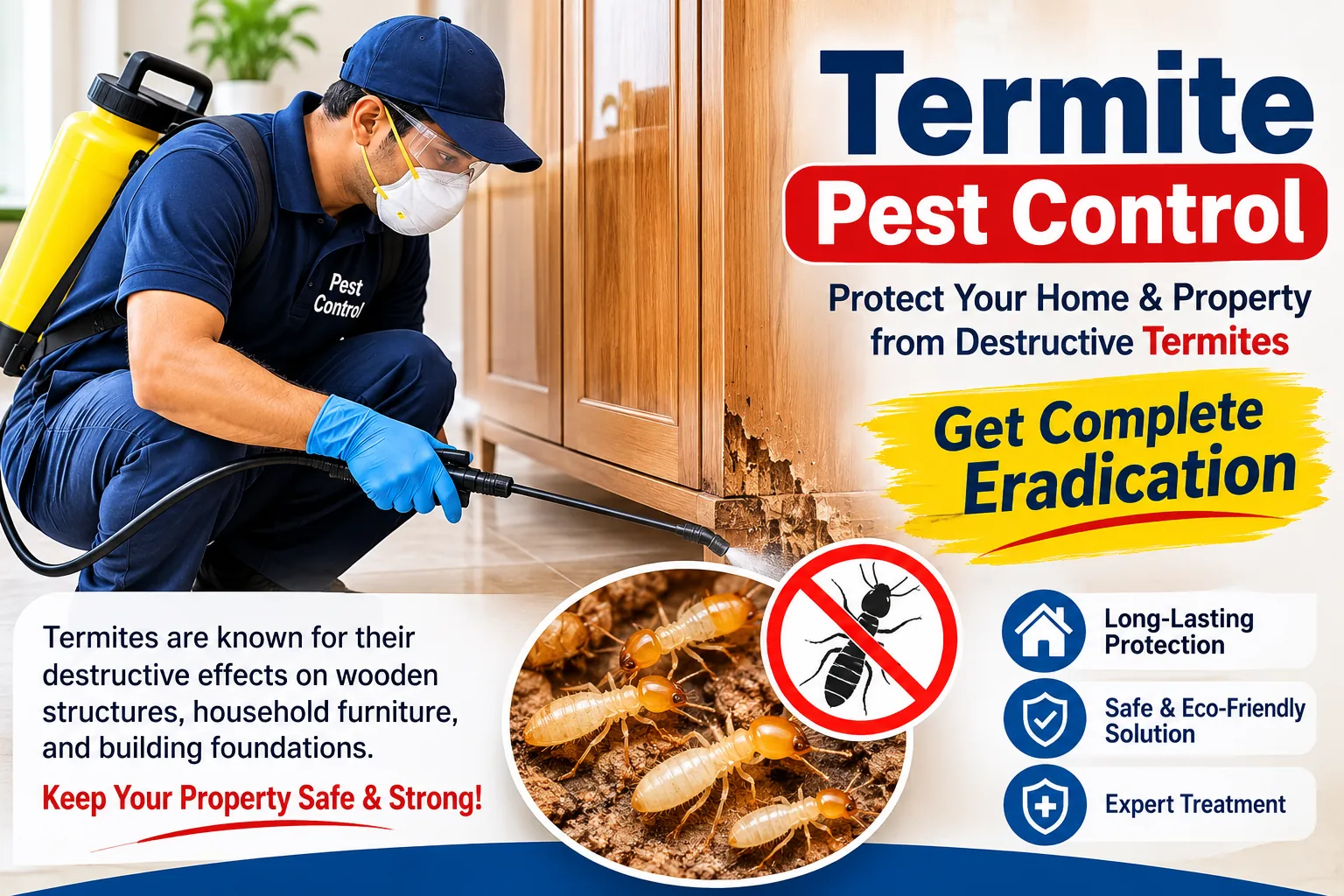
Termite Control in Malad — termite damage on a wooden door frame and a technician injecting termiticide along the wall-floor junction
  • Registered products

    Used strictly according to label directions.

  • In-house technicians

    Trained staff on every visit — no subcontractors.

  • Written quote & report

    Fixed price before work, service report after.

  • Written warranty

    Free re-treatment within your service period.

If termites have become a problem in Malad, you are not alone — it is one of the most common requests we receive in Mumbai’s western suburbs. Our trained technicians treat the source, not just what you can see.

Every visit is carried out by our own trained technicians — not subcontractors — using products registered for professional use, applied according to their label directions.

Method
Drill-fill-seal + wood treatment
Treatment time
4–6 hours (typical 2 BHK)
Need to vacate?
Not usually; avoid treated rooms for a few hours
Warranty
Written, period as per plan
Best for
Flats, bungalows, offices, new construction

Western Suburbs

About pest control in Malad

Homes and businesses in Malad face the same humid conditions as the rest of the region, with shared drains and nearby shops keeping pests active all year.

Western suburban neighbourhoods combine gated towers, older cooperative societies and independent bungalows, often close to creeks, mangroves or the Sanjay Gandhi National Park edge. Proximity to creeks and mangroves means mosquito pressure is high during and after the monsoon. Restaurants and cloud kitchens in commercial lanes keep German cockroach populations active in nearby buildings.

Alongside termite control, households and businesses in Malad also book cockroach control, commercial pest control, mosquito control and pest control with us — see the links further down this page.

Signs of termites in Malad homes

  • Hollow-sounding door frames, skirting boards or furniture
  • Bubbling or peeling paint and damp patches on walls
  • Mud tubes (thin tunnels of soil) on walls, skirting or behind wardrobes
  • Doors and windows that suddenly stick or no longer close properly
  • Small piles of discarded wings near windows after the first rains

Why are termites such a problem in Malad?

Subterranean termites thrive in Malad's humidity and long monsoon. They live in the soil, travel through cracks in floors, expansion joints, electrical conduits and plumbing lines, and feed on cellulose — door frames, wardrobes, modular kitchens, books and even wallpaper.

Because they work hidden inside wood and walls, damage is often found only after it is expensive to repair. Swarms of winged termites after the first monsoon showers are a common early warning sign.

Pre-construction vs post-construction termite treatment

Pre-construction treatment is done at the foundation stage: the soil in foundation pits, plinth areas and under the floor is treated before concreting, creating a barrier beneath the whole building. It is the most effective time to protect a new structure.

Post-construction treatment is for occupied homes and offices, using the drill-fill-seal method plus targeted wood treatment. Most Mumbai apartments need post-construction treatment.

How much does anti-termite treatment cost in Malad?

Cost depends on carpet area, the number of rooms and wooden fixtures, infestation level, and whether it is pre- or post-construction work. Commercial and society jobs are quoted per running foot or area.

We inspect first, show you the activity we find, and give a fixed written quote with warranty terms before work begins.

How our termite control works in Malad

  1. Inspect

    We check skirting, door frames, wardrobes, kitchen units and walls with moisture and tap testing to find active galleries and entry points. For Malad, the technician look at balconies, lofts and storage areas that are often missed.

  2. Plan the barrier

    We mark drilling points along wall-floor junctions, door frames and plumbing entries based on the layout.

  3. Drill and inject

    Small holes are drilled and a registered termiticide is injected to form a continuous treated zone.

  4. Treat infested wood

    Active wooden fixtures are injected and sprayed to eliminate termites already inside.

  5. Seal and document

    Holes are sealed neatly and you receive a service report with warranty and follow-up inspection details.

Before and after the treatment

Before the visit

  • Move light furniture about 1–2 feet away from walls so skirting can be reached.
  • Empty the bottom shelf of wardrobes and kitchen cabinets that touch the floor.
  • Cover or remove food, utensils and aquarium tanks from rooms being treated.

After the treatment

  • Keep children and pets out of treated rooms for 3–4 hours and ventilate well.
  • Do not wash the floor along the drilled line for 24 hours.
  • Report any new mud tubes during the warranty period for free re-inspection.

Prevention tips for Malad homes

  • Keep wooden furniture slightly away from damp walls.
  • Schedule an annual termite inspection, especially before and after the monsoon.
  • Fix plumbing leaks and seepage quickly — damp walls attract termites.

What you can expect in Malad

  • Trained in-house technicians

    Our own technicians carry out every visit and follow label directions and safety procedures.

  • Written warranty

    Your service period is written on the report, with free re-treatment if activity returns within it.

  • Low-odour methods indoors

    Gel baits, bait stations and targeted crack-and-crevice treatment keep odour and exposure low.

  • Homes and businesses

    We treat flats, bungalows, housing societies, offices, restaurants, shops and warehouses.

How much does termite control cost in Malad?

Pricing for termite control in Malad is based on carpet area, the number of rooms or zones treated, the infestation level and the plan you choose. You’ll know the exact amount before any work starts.

Ready to sort out termites in Malad? Call or WhatsApp +91-94533 94533, or book a free inspection online — we’ll confirm a convenient time.

Book inspection


Customer reviews

What customers say about termite control

Real, published reviews from our customers. Reviews for this service appear first.

Customer rating

5.0out of 5

Based on 8 published reviews

5
100%
4
0%
3
0%
2
0%
1
0%
Read all 8 reviews

Priya Sharma

Powai, Mumbai

I noticed termite damage in my wooden furniture and contacted this pest control company in Mumbai. Their termite control service was professional and well-organized. The technicians inspected the affected areas and explained the treatment process properly. Great experience and professional service!

Termite Control

Neha Kapoor

Borivali West, Mumbai

We booked residential pest control services for our apartment in Borivali West, Mumbai. The team was courteous and handled the inspection and treatment professionally. They addressed our concerns and explained how to prevent future pest problems. Recommended for homeowners looking for professional pest control services.

Residential Pest Control

Amit Desai

Thane West, Mumbai

We were struggling with bed bugs in our bedrooms and needed a reliable solution. The team provided a detailed bed bug treatment in Thane West. Their technicians were punctual, knowledgeable, and explained the precautions to follow after treatment. A good experience overall!

Bed Bug Treatment

Rahul Mehta

Andheri West, Mumbai

We were facing a serious cockroach problem in our kitchen and bathrooms. The pest control team provided professional cockroach pest control services in Andheri West, Mumbai. The treatment was completed on time, and the team explained all safety precautions clearly. Highly recommended for reliable residential pest control in Mumbai!

Cockroach Pest Control

Kunal Patil

Office Manager, Powai

We were facing a severe rodent issue in our IT office which was damaging our server cables. The Eco-Friendly Pests team set up discrete bait stations over the weekend, ensuring zero disturbance to our employees. Outstanding commercial pest management!

Commercial Pest Control (Rodents)

Vikas Desai

Villa Owner, Juhu

Living near the coast means a lot of mosquitoes during the monsoon. Their indoor residual spray and outdoor fogging worked wonders. Finally, we can leave our windows open in the evening without the fear of Dengue or Malaria. Excellent preventive pest control.

Mosquito Control & Fogging

Trusted by businesses and housing societies

  • Birla logo
  • Pheonix logo
  • Shyam logo
  • DGS logo
  • GD logo
  • Sonata logo

Termite Control · Malad

Frequently asked questions

Is your pest control treatment completely safe for kids, pregnant women, and pets?

Yes, absolutely! At Eco-Friendly Pests, we strictly use 3rd-generation, government-approved herbal formulations. Our treatments are 100% non-toxic, odorless, and completely safe for children, pregnant women, senior citizens, and indoor pets. You don't have to worry about harmful chemical exposure.

Do I need to empty my kitchen cabinets or leave the house during the service?

Not at all! Our advanced herbal gel treatments for cockroaches and ants require zero prep work. You do not need to empty your kitchen shelves, wash utensils afterward, or vacate your home. The process is completely hassle-free and discreet.

Will the treatment leave a bad chemical smell in my house?

No. Unlike traditional pest control that uses harsh petroleum-based chemicals, our modern herbal treatments are 100% odorless. There will be no lingering bad smell, and you can resume your daily activities in the same room immediately.

Do you provide any guarantee or warranty on your pest control services?

Yes, all our major services (like Termite, Bed Bugs, and Cockroach control) come with an iron-clad warranty. If you notice pests returning during your warranty period, our technicians will visit and perform a re-treatment absolutely free of cost.

Do shops, offices and restaurants in Malad get termite control?

Yes. Commercial sites in Malad can book one-time treatment or a scheduled programme with service reports, with visits planned outside working hours where possible.

Do you provide termite control in Malad?

Yes. Eco-Friendly Pests provides termite control in Malad and nearby areas in Mumbai’s western suburbs. Call or WhatsApp +91-94533 94533 to book a free inspection.

What does termite control cost in Malad?

It depends on the size of the property, the level of activity and the plan you choose. After a free inspection in Malad you get a fixed written quote with no hidden charges.

How do I book termite control in Malad?

Call or WhatsApp +91-94533 94533 (Monday to Saturday, 9 am to 9 pm) or use the booking form on this page. Mention Malad and the problem you’re seeing.

What should I do before the technician arrives in Malad?

Move light furniture about 1–2 feet away from walls so skirting can be reached. Empty the bottom shelf of wardrobes and kitchen cabinets that touch the floor. Your technician will confirm anything else when the visit is booked.

Can housing societies in Malad book termite control for the whole building?

Yes. Treating common areas such as drains, shafts, garbage rooms and compound walls along with individual flats gives longer-lasting results, and we document every visit for the society.

Do I need to leave home during termite treatment?

Usually not, but you should keep away from the room being drilled and treated, and keep children and pets out of treated rooms for 3–4 hours while it ventilates.

Can termites damage concrete walls?

Termites cannot eat concrete, but they travel through cracks, joints and conduits in it to reach wood, paper and other cellulose. That is why treatment targets the wall-floor junction and entry points, not just the furniture.