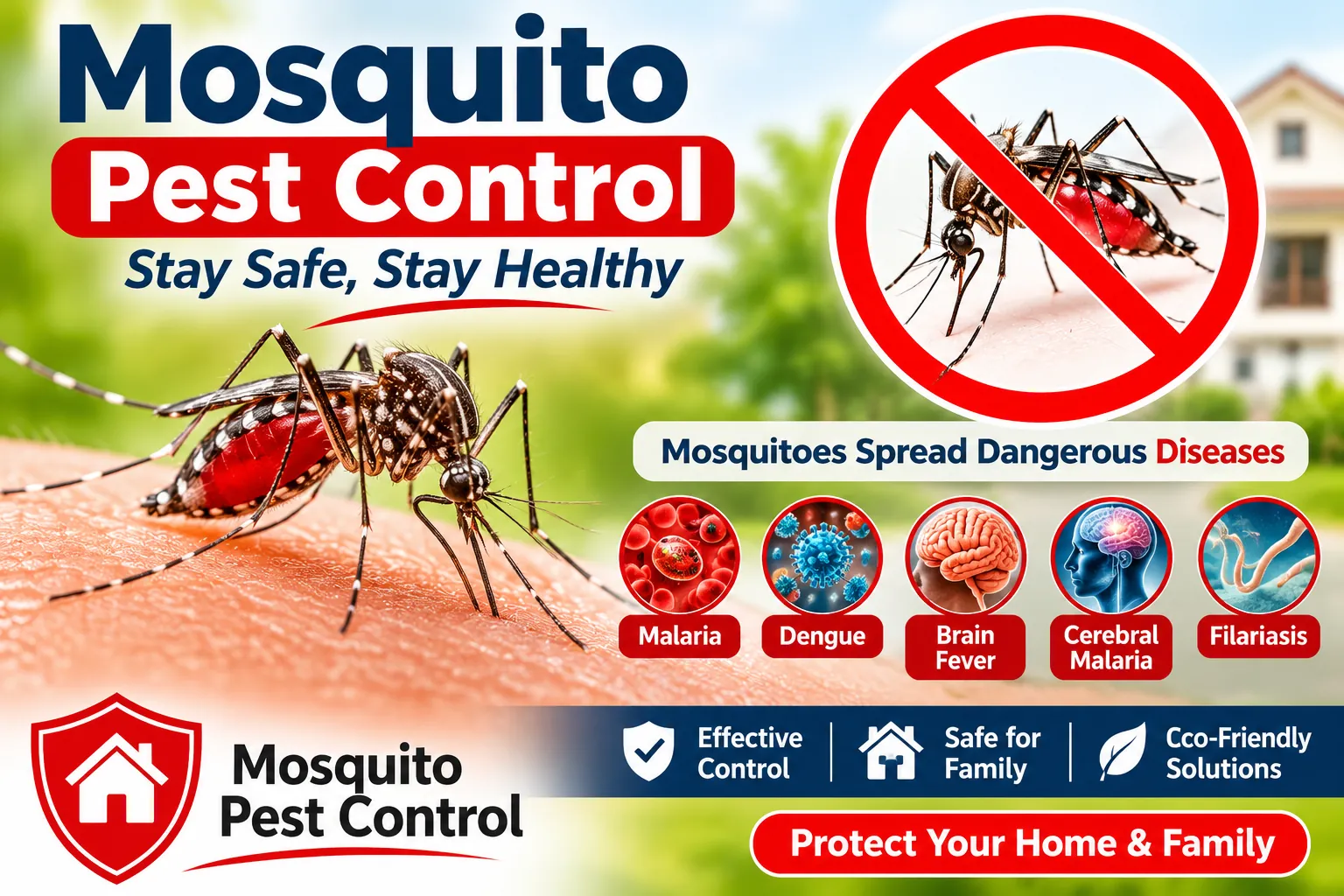
From the first inspection to the follow-up visit, our mosquito control in Purandar Fort is planned around your property — whether it is a compact flat, a family bungalow, a housing society or a commercial unit.
Every visit is carried out by our own trained technicians — not subcontractors — using products registered for professional use, applied according to their label directions.
- Methods
- Larvicide, residual spray, fogging
- Treatment time
- 1–3 hours depending on area
- Re-entry
- After fog settles (about 1 hour)
- Frequency
- Monthly; fortnightly in monsoon
- Best for
- Societies, bungalows, offices, schools, hospitals
Pune & Pimpri-Chinchwad
What we see in Purandar Fort
Neighbourhoods around Purandar Fort see steady footfall from visitors, which means food stalls, flower shops and waste — conditions that support cockroaches, rats and flies close to homes.
Pune’s milder climate is drier than Mumbai’s, but heavy monsoon rains, river-side neighbourhoods and plenty of greenery still support termites, mosquitoes and rodents. Neighbourhoods along the Mula–Mutha rivers see higher mosquito activity after the monsoon. IT parks, hostels and PG accommodation keep bed bug and cockroach demand steady.
Alongside mosquito control, households and businesses in Purandar Fort also book cockroach control, commercial pest control, termite control and wood borer treatment with us — see the links further down this page.
Signs of mosquitoes in Purandar Fort homes
- Mosquitoes resting in dark corners, under furniture and behind curtains
- Larvae ('wrigglers') visible in buckets or water containers
- Dengue or malaria cases reported in your building or neighbourhood
- Stagnant water in flower pots, coolers, tyres, overhead tanks or terraces
- Frequent bites at dawn and dusk, or during the day (Aedes mosquitoes)
How does professional mosquito control work?
Fogging alone gives temporary relief. We combine:
- Source reduction — finding and removing stagnant water during inspection.
- Larvicide — treating water that cannot be removed (drains, sumps, ducts) so larvae cannot develop into adults.
- Indoor residual spray — treating walls and dark resting areas where adult mosquitoes rest.
- Thermal or cold fogging (ULV) — fast knockdown of adult mosquitoes in gardens, compounds, parking and common areas.
Is mosquito fogging safe?
Fogging uses registered insecticides at low doses. To stay safe, close windows during fogging, keep children and pets indoors, cover fish tanks and food, and wait about an hour before using fogged outdoor areas. Our technicians use protective equipment and avoid fogging near open food and water.
Mosquito control for housing societies and campuses
Societies, schools and hospitals benefit most from a monthly schedule, increasing to fortnightly during June–September. We cover compounds, gardens, basements, parking, drains, overhead and underground tank areas and terraces, and share a breeding-site report with the managing committee.
What happens during the visit
Survey breeding sites
We inspect terraces, gutters, tanks, pots, drains and construction areas for stagnant water and larvae. At your Purandar Fort property, we note anything in neighbouring units or common areas that could cause re-infestation.
Source reduction
We help remove or empty containers and advise on covering tanks and fixing blocked drains.
Larvicide
Water that cannot be removed is treated so larvae cannot develop.
Residual spray and fogging
Resting areas are sprayed and outdoor areas fogged to knock down adult mosquitoes.
Repeat
Monthly visits — fortnightly in monsoon — keep populations low.
Before and after the treatment
Before the visit
- Empty water from coolers, pots and buckets before the visit.
- Keep children and pets indoors during and for about an hour after fogging.
- Cover food, utensils, fish tanks and bird cages.
After the treatment
- Change water in flower vases and pet bowls every two days.
- Ventilate rooms after indoor residual spraying before re-entering.
- Report new stagnant-water sites in your building to the society.
Keeping mosquitoes away after treatment
- Cover overhead tanks and keep gutters and drains clear.
- Check terraces, balconies and AC drip trays after rain.
- Use window mesh and mosquito nets, especially in monsoon.
What you can expect in Purandar Fort
Homes and businesses
We treat flats, bungalows, housing societies, offices, restaurants, shops and warehouses.
Low-odour methods indoors
Gel baits, bait stations and targeted crack-and-crevice treatment keep odour and exposure low.
Free inspection first
We find the cause before quoting, so you only pay for treatment you actually need.
Trained in-house technicians
Our own technicians carry out every visit and follow label directions and safety procedures.
How much does mosquito control cost in Purandar Fort?
Pricing for mosquito control in Purandar Fort is based on carpet area, the number of rooms or zones treated, the infestation level and the plan you choose. You’ll know the exact amount before any work starts.
Don’t wait for mosquitoes in Purandar Fort to spread to the rest of the building. A free inspection is the quickest way to know exactly what you’re dealing with.
Book inspection